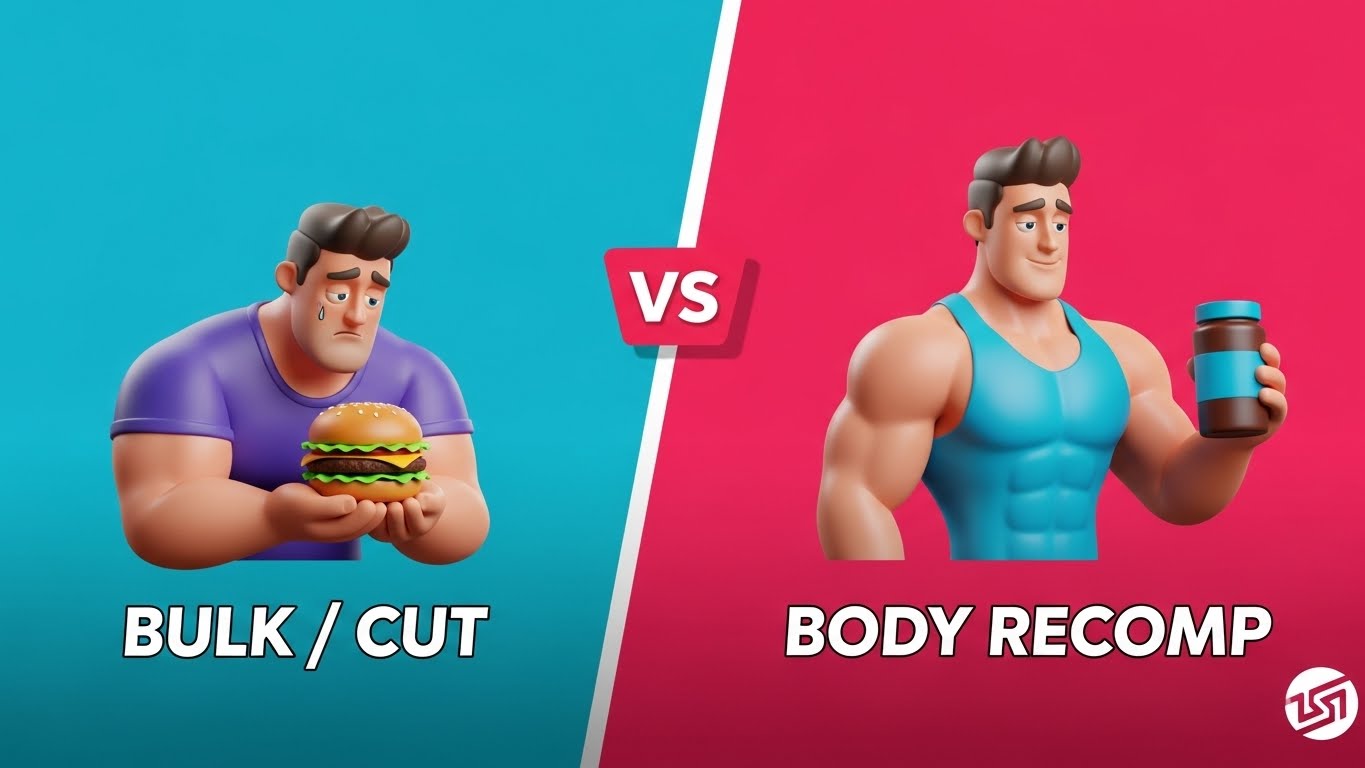

For the longest time, I thought the “Bulk and Cut” cycle was the only way to see real results. You eat like a horse to gain muscle (and a bunch of fat), then you starve yourself to lose the fat (and inevitably some muscle). It’s exhausting.
But I’ve been diving into Jeff Nippard’s deep dive on Body Recomposition, and it turns out, the “science-based” approach is a lot more sustainable. Essentially, it’s the “Holy Grail” of fitness: building muscle and losing fat at the exact same time.
Here are my personal notes and the key takeaways from his breakdown.
Wait, Is This Actually Possible?
According to Jeff, it isn’t just a myth for beginners. While it’s easier for “newbies,” he highlights five groups who are prime candidates:
- The New Lifter: Everything is a fresh stimulus.
- The Overweight Trainee: Your body uses stored fat as a massive energy source to build muscle.
- The “Detrained”: If you’ve taken a break, “muscle memory” makes a recomp much faster.
- The Sub-Optimized: If you’ve been lifting but your diet or sleep has been a mess, you have huge untapped potential.
The Game Plan: My Top 3 Takeaways
1. High Protein is Non-Negotiable
This was the biggest point. If you aren’t eating enough protein, your body won’t have the building blocks to repair muscle while in a caloric deficit. Jeff recommends 1.2 to 1.6 grams of protein per pound of lean body mass. That’s a lot of chicken, Greek yogurt, or protein shakes, but it’s the secret sauce.
2. Don’t “Starve” the Fat Off
The goal isn’t a massive deficit. If you drop your calories too low, your strength in the gym will tank.
- The Strategy: Stay near maintenance calories. If you’re a bit leaner, go slightly above (+5%); if you’re trying to lose more fat, go slightly below (-10% to -20%).
3. Sleep is the “Silent” Muscle Builder
Jeff cited a study that blew my mind: sleep-deprived people lost almost all their weight from muscle instead of fat. If you aren’t getting 7–9 hours of sleep, you’re essentially sabotaging your hard work in the gym.
Final Thoughts
Body recomposition takes a bit more patience than a traditional “crash diet,” but the results are much higher quality. You end up looking lean and athletic rather than just “skinny.”
If you want to see the full scientific breakdown, the charts, and the specific studies Jeff uses to back this up, I highly recommend watching his full video below. It’s a game-changer for anyone tired of the bulk/cut cycle.
Check out the full video here:-