
If you’ve ever scrolled through fitness forums, you’ve seen the conflicting advice. Some swear by fasted morning cardio to “incinerate” fat, while others claim evening lifting is the secret to muscle growth and metabolism.
But what does the science actually say? Is there a “magic hour” that melts fat faster than any other?
The answer is a mix of biology, psychology, and a truth that most “gurus” won’t tell you. Let’s break down the pros and cons of each time slot so you can find the best time for your body.
1. The Case for Morning Workouts (The Fasted Advantage)
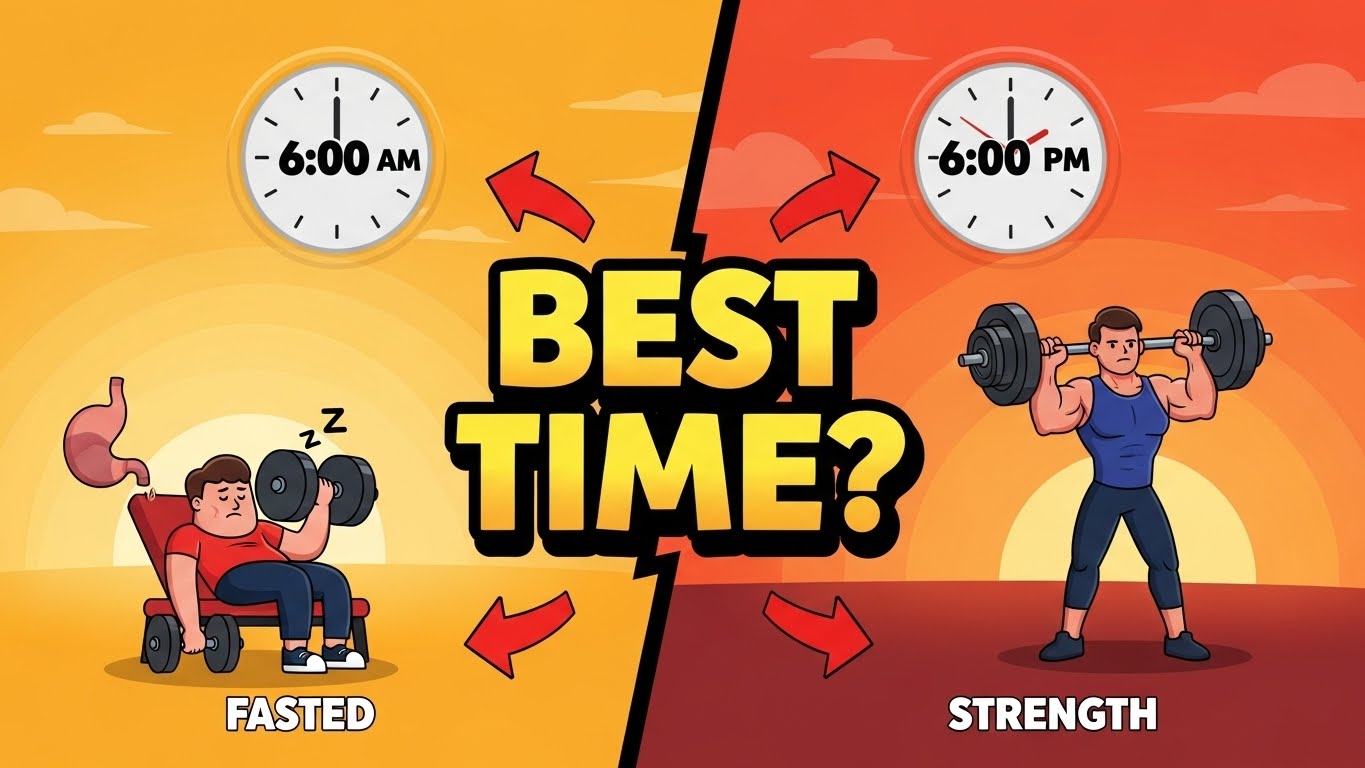
Many people believe that working out in the morning on an empty stomach (fasted) forces the body to burn more fat for fuel.
- The Science: While you do burn a higher percentage of fat during a fasted workout, studies show that over a 24-hour period, total fat loss is the same regardless of whether you ate or not.
- The Real Benefit: Morning workouts are great for consistency. By training at 6:00 AM, you ensure that work stress, social plans, or “feeling tired” later in the day won’t derail your progress.
- The Verdict: Best for those with unpredictable schedules who want to get their movement “out of the way.”
2. The Case for Afternoon Workouts (The Performance Peak)
Physiologically, your body is at its peak performance in the late afternoon and early evening (between 2:00 PM and 6:00 PM).
- Body Temperature: Your core body temperature peaks during this window. Warm muscles are more flexible, produce more power, and are less prone to injury.
- Hormonal Edge: For many, the ratio of testosterone to cortisol is most favorable in the afternoon, making this an ideal time for heavy strength training.
- The Verdict: Best for those looking to maximize strength and muscle mass (which, in turn, boosts your metabolic rate).
3. The Case for Evening Workouts (The Stress Reliever)
Training after work can be a powerful psychological tool to transition from “office mode” to “home mode.”
- The Benefit: It can help blow off steam and prevent evening “boredom eating.”
- The Risk: For some, high-intensity exercise late at night can spike adrenaline and cortisol, making it difficult to fall asleep. Since sleep is vital for fat loss, this can be a counterproductive trade-off.
- The Verdict: Best for night owls, provided it doesn’t interfere with a 7–9 hour sleep window.
The Secret Ingredient: The “Consistency Window”
Google search data shows people constantly look for the “best” time, but science shows that the body adapts to when you train. If you always workout at 7:00 AM, your body becomes more efficient at mobilizing energy at 7:00 AM. If you constantly switch times, your body remains in a state of “jet lag.”
The Golden Rule of Fat Loss: The best time to workout is the time you can stick to at least 4 days a week for the next 6 months.
Comparison at a Glance: Which Slot is for You?
| Feature | Morning | Afternoon | Evening |
| Consistency | High | Moderate | Low |
| Strength/Power | Lower | Highest | Moderate |
| Fat Oxidation | Slightly Higher | Normal | Normal |
| Sleep Impact | Improves Sleep | Neutral | Can Disrupt |
3 Tips to Maximize Fat Loss Regardless of the Time
- Don’t “Eat Back” Your Workout: Regardless of when you train, if you eat a massive meal just because you exercised, you will stall your fat loss.
- Stay Hydrated: Dehydration is often mistaken for hunger. Drink 500ml of water before your session.
- Focus on Intensity: A focused 30-minute workout at 9:00 PM is better than a distracted 90-minute workout at 6:00 AM.
The Bottom Line
There is no “magic” time that overrides the law of thermodynamics. Fat loss is driven by a calorie deficit, not a clock. Pick the time that fits your lifestyle, keep your intensity high, and stay consistent.