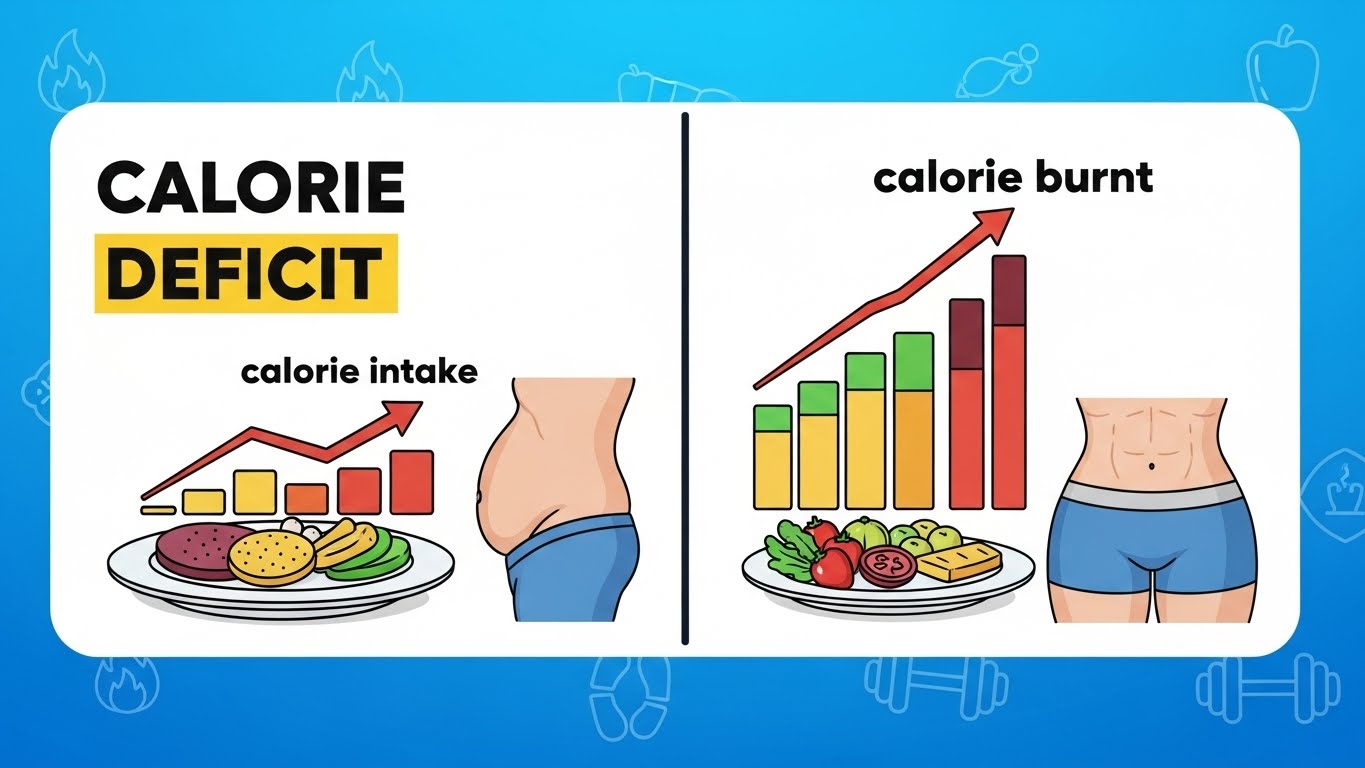

If you’ve ever felt overwhelmed by the endless sea of fad diets—from Keto to Intermittent Fasting—here is a liberating truth: Every single successful diet works because of one thing: a calorie deficit.
In this guide, we’re breaking down the science of weight loss based on expert nutritional advice to help you stop guessing and start seeing results.
What is a Calorie Deficit?
At its simplest, a calorie deficit occurs when you provide your body with fewer calories than it needs to maintain its current weight. When this happens, your body is forced to find an alternative energy source, which usually means tapping into stored body fat.
Think of your body like a bank account. If you spend more money (energy) than you deposit (food), you have to pull from your savings (fat stores).
How to Calculate Your Maintenance Calories (TDEE)
Before you can create a deficit, you need to know your Total Daily Energy Expenditure (TDEE). This is the “break-even” point where your weight stays exactly the same.
There are two primary ways to find this number:
1. The Harris-Benedict Equation (The Formula Method)
This is the scientific gold standard for estimating your Basal Metabolic Rate (BMR)—the calories your body burns just staying alive (breathing, circulating blood, etc.).
- For Men: BMR = 66.5 + (13.75 x weight in kg) + (5.003 x height in cm) – (6.75 x age in years)
- For Women: BMR = 655.1 + (9.563 x weight in kg) + (1.850 x height in cm) – (4.676 x age in years)
Once you have your BMR, multiply it by your Activity Factor:
- Sedentary (Desk job): BMR x 1.2
- Lightly Active (1-3 days of exercise): BMR x 1.375
- Moderately Active (3-5 days of exercise): BMR x 1.55
- Very Active (6-7 days of hard exercise): BMR x 1.725
2. The Monitoring Method (The Accuracy Method)
Calculators are just estimates. For the most accurate results, track your current food intake for 7-10 days while weighing yourself daily. If your weight stays the same, your average daily intake is your maintenance level.
How Big Should Your Calorie Deficit Be?
A common mistake is cutting calories too low, too fast. This leads to muscle loss, extreme hunger, and “crashing.”
- Small Deficit: 200–300 calories below maintenance. (Slow, sustainable, best for muscle retention).
- Moderate Deficit: 500 calories below maintenance. (The industry standard for losing roughly 1lb/0.5kg per week).
- Aggressive Deficit: 700+ calories below maintenance. (Faster results, but harder to maintain and higher risk of fatigue).
The Expert Advice: Start with a 300–500 calorie deficit. It’s the “sweet spot” for losing fat without feeling like you’re starving.
3 Tips for Staying in a Deficit Without Being Miserable
- Prioritize Protein: Protein is the most satiating macronutrient. It keeps you full and protects your muscles while you lose fat.
- Eat High-Volume Foods: Fill half your plate with leafy greens and vegetables. They are low in calories but take up a lot of space in your stomach.
- Track Your Weekly Average: Don’t panic if the scale goes up one day. Water retention, salt, and stress can cause daily fluctuations. Look at your weekly average weight to see the true trend.
What Happens When Weight Loss Stalls?
Plateaus are a natural part of the journey. As you lose weight, your body requires less energy to move, and your metabolism may slow down slightly (Metabolic Adaptation).
When you hit a plateau for more than two weeks, you have two choices:
- Slightly increase your activity (e.g., add 2,000 more steps a day).
- Slightly decrease your calories (e.g., drop another 100 calories).
Final Thoughts
Calculating a calorie deficit isn’t about restriction; it’s about awareness. By understanding the math behind your metabolism, you take the power back from “magic” diets and put your progress into your own hands.
Are you ready to start your journey? Bookmark this page or use a TDEE calculator to find your starting number today!