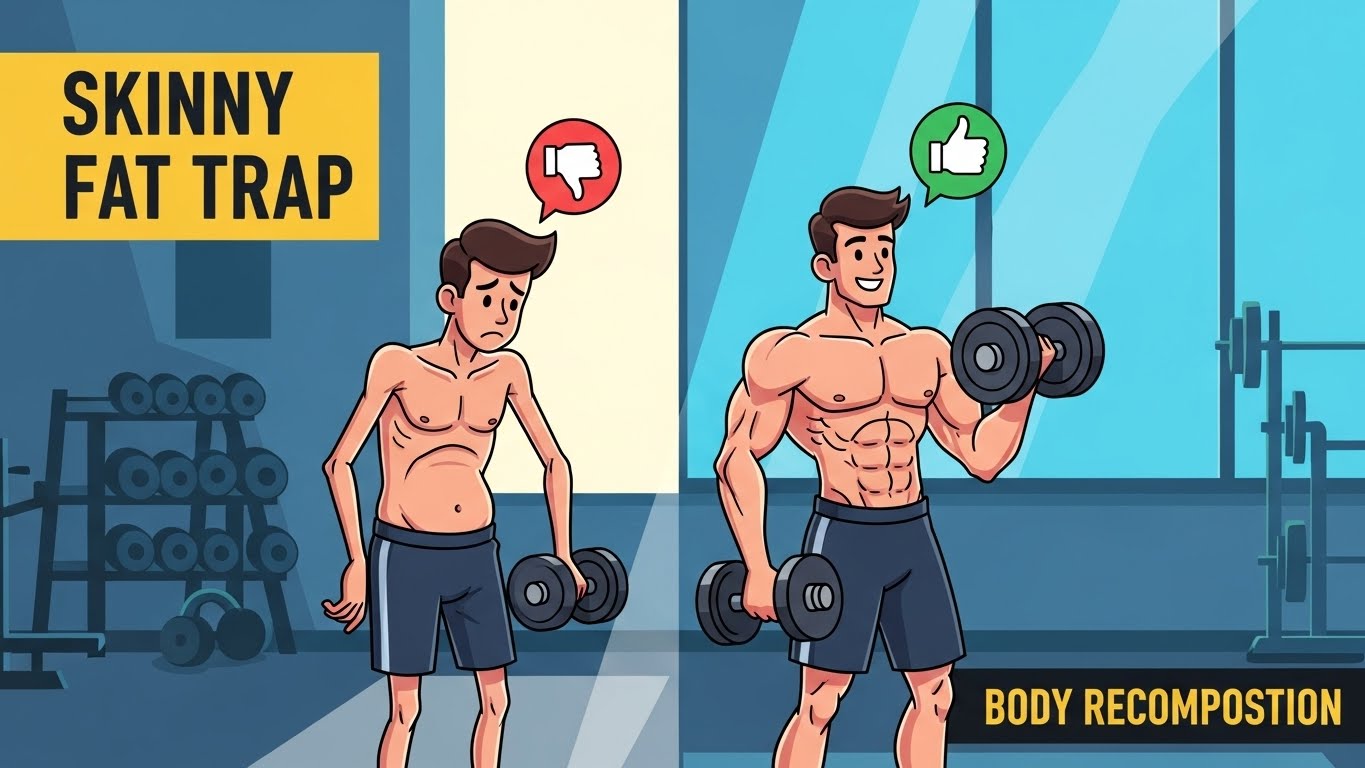

We’ve all seen the “crash diet” disaster: you lose 10 pounds in two weeks, but instead of looking lean and athletic, you just look like a smaller, softer version of yourself. This is the “Skinny Fat” trap, and it happens because your body burned through its hard-earned muscle for energy instead of just targeting your fat stores.
If you want to get shredded while keeping your strength, you don’t need a miracle supplement. You need to understand Body Recomposition. Here is the 5-step blueprint to losing fat while protecting every ounce of muscle.
1. The “Goldilocks” Calorie Deficit
The biggest mistake people make is cutting calories too aggressively. When you starve yourself, your body enters a catabolic state, breaking down muscle tissue to fuel your brain and organs.
- The Rule: Avoid “crash” deficits. Aim for a moderate reduction of 20–25% below your maintenance calories.
- The Goal: Aim for a weight loss of 0.5% to 1% of your body weight per week. Any faster, and you are almost certainly losing muscle.
2. Prioritize Protein (The Muscle Sentry)
Protein isn’t just for bulking; it’s even more critical during a cut. High protein intake sends a signal to your body that even though energy is low, there are enough building blocks to keep your muscles intact.
- The Target: Consume 1.6g to 2.2g of protein per kilogram of body weight (approx. 0.8g–1g per pound).
- The Source: Focus on high-leucine sources like chicken, whey, eggs, and soy, which specifically trigger muscle protein synthesis.
3. Lift Heavy to Stay Heavy
When you go into a calorie deficit, your body asks: “Do I really need these expensive, calorie-burning muscles?” If you stop lifting heavy, the answer is “No.”
To keep your muscle, you must give your body a reason to keep it.
- Don’t switch to “high reps for toning.” This is a myth.
- Keep the intensity high. Continue lifting weights that challenge you in the 6–12 rep range. If you lose strength on your “big lifts” (squats, bench, rows), your deficit is likely too steep.
4. Limit High-Intensity Cardio (HIIT)
While cardio is great for heart health, too much high-impact cardio can interfere with muscle recovery. This is known as the “Interference Effect.”
- The Strategy: Prioritize LISS (Low-Intensity Steady State) cardio, like brisk walking. Aim for 8,000–10,000 steps a day. It burns fat without adding systemic fatigue that prevents you from lifting heavy in the gym.
5. The Secret Weapon: Sleep and Stress Management
Cortisol (the stress hormone) is the enemy of muscle. High cortisol levels encourage fat storage in the midsection and accelerate muscle breakdown.
- Sleep: Aim for 7–9 hours. Sleep deprivation drops your testosterone and spikes your hunger hormones (ghrelin).
- Recovery: If you aren’t recovering, you aren’t retaining muscle. Listen to your body and take rest days seriously.
Summary: Your Muscle-Sparing Checklist
| Action | Recommendation |
| Calorie Deficit | 300–500 calories below maintenance |
| Daily Protein | 1g per lb of body weight |
| Training Style | Heavy Resistance Training (3–5x weekly) |
| Cardio | Daily walking (Steps > Sprints) |
| Rest | 8 hours of quality sleep |
The Bottom Line
Losing weight without losing muscle is a slow game. It requires the patience to avoid “quick fixes” and the discipline to keep your protein and lifting intensity high. Stick to this system for 12 weeks, and you won’t just be lighter—you’ll be leaner, stronger, and more defined.