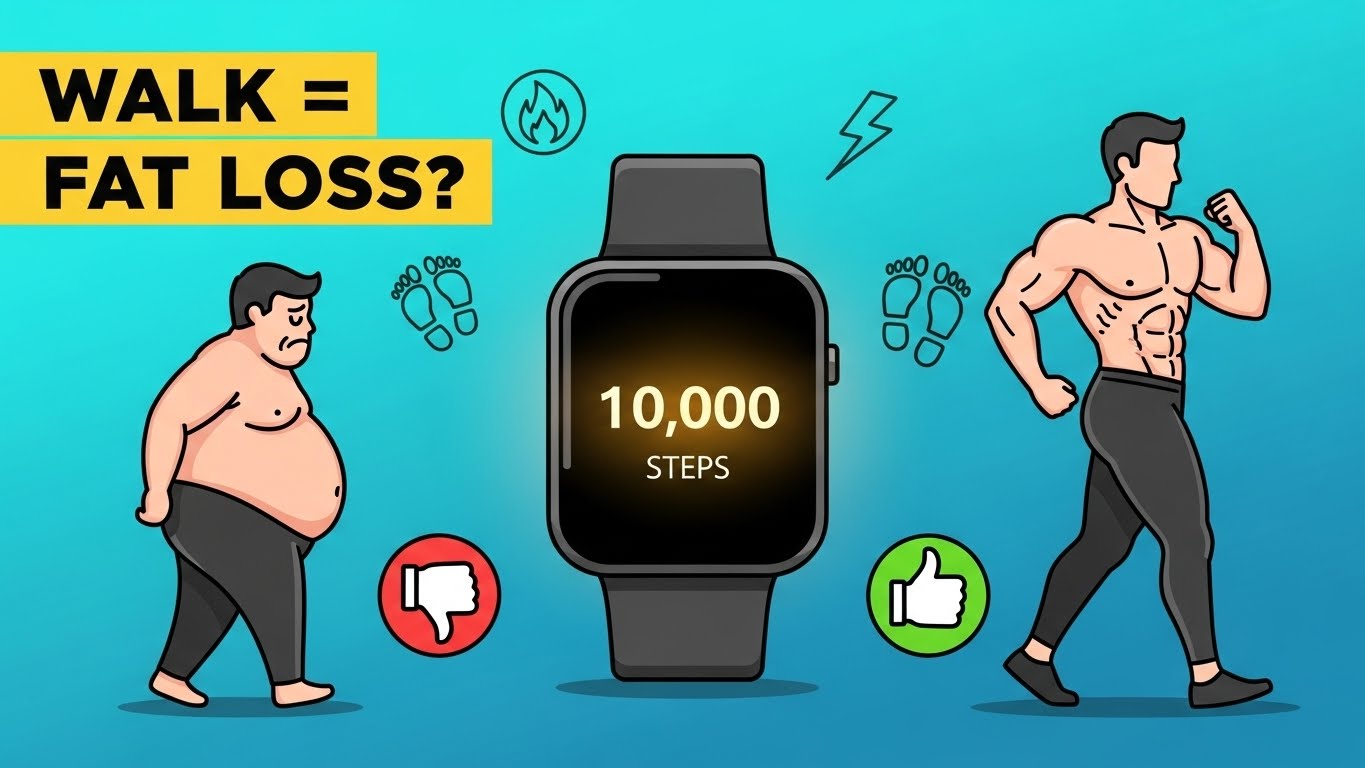

Walking is the most underrated tool in the fitness world. It’s free, it’s low-impact, and it requires zero equipment. But the question remains: Can you actually lose significant weight just by walking?
The short answer is yes—but there is a catch. Walking is a powerful tool for fat loss, but only if it’s paired with a specific strategy. Here is the breakdown of how to turn your daily stroll into a weight-loss engine.
1. The Power of NEAT (The Calories You Don’t Count)
To understand why walking works, you need to understand NEAT (Non-Exercise Activity Thermogenesis). This refers to the energy burned for everything we do that isn’t sleeping, eating, or sports-like exercise.
For most people, NEAT accounts for a much larger portion of daily calorie burn than a 45-minute gym session.
- The Gym: 1 hour of intense lifting = ~300 calories.
- Walking: 10,000 steps throughout the day = ~400–500 calories.
By increasing your step count, you are effectively “stoking the fire” of your metabolism all day long without the exhaustion of a high-intensity workout.
2. Walking Doesn’t Spike Your Hunger
One of the biggest problems with intense cardio (like running or HIIT) is that it often triggers a massive spike in ghrelin (the hunger hormone). You burn 500 calories, but you feel so famished that you eat 800 calories at your next meal.
The Walking Advantage: Brisk walking typically doesn’t trigger that “survival hunger.” It allows you to burn fat without the physiological urge to overeat afterward, making it much easier to maintain a calorie deficit.
3. The “Low-Impact” Benefit for Fat Loss
If you are carrying extra weight, high-impact exercises like running can be brutal on your joints.
- Consistency is King: If you run today but your knees hurt for three days, you stop moving.
- The Walking Edge: You can walk every single day. Because it’s low-intensity, the recovery time is near zero, allowing for a higher total weekly calorie burn.
4. How to Make Walking “Enough” (The 3 Rules)
If you want to lose weight by walking, you can’t just stroll casually to the fridge. You need a system:
A. The Brisk Pace Rule
You should walk at a pace where you can still talk, but you’d find it difficult to sing. This “Zone 2” effort ensures your heart rate is high enough to prioritize fat oxidation.
B. The Nutrition Anchor
Walking burns calories, but it cannot fix a bad diet. To lose weight, you must ensure your total daily intake is still lower than your total output.
The Math: If you walk off 300 calories but eat an extra 300 calories, your weight will stay exactly the same.
C. The Progressive Increase
If you currently walk 3,000 steps, don’t jump to 15,000 tomorrow. Aim to add 1,000 steps to your daily average each week until you are consistently hitting the 8k–12k range.
Walking vs. Running: Which is Better?
| Feature | Walking | Running |
| Calorie Burn (per min) | Lower | Higher |
| Joint Stress | Very Low | High |
| Hunger Spike | Minimal | High |
| Sustainability | Very High | Moderate |
The Verdict: Running burns more calories per minute, but walking often leads to more fat loss per month because it is easier to stick to and harder to “eat back.”
The Bottom Line
Walking is absolutely enough to lose weight, provided it leads to a consistent calorie deficit. It is the perfect starting point for beginners and a secret weapon for advanced athletes looking to get lean without burning out.