
We live in a culture that idolizes the “No Days Off” mentality. We see the motivational posters, the 4:00 AM gym selfies, and the influencers claiming that if you aren’t out-working everyone every single day, you don’t want it bad enough.
But if we look at human physiology instead of Instagram captions, a different story emerges.
If your goal is to lose fat, build muscle, and actually feel good, working out every day is usually the fastest way to stop your progress dead in its tracks. Here is why more isn’t always better, and why your rest days are actually your “growth days.”
1. The Recovery Debt: You Aren’t a Machine
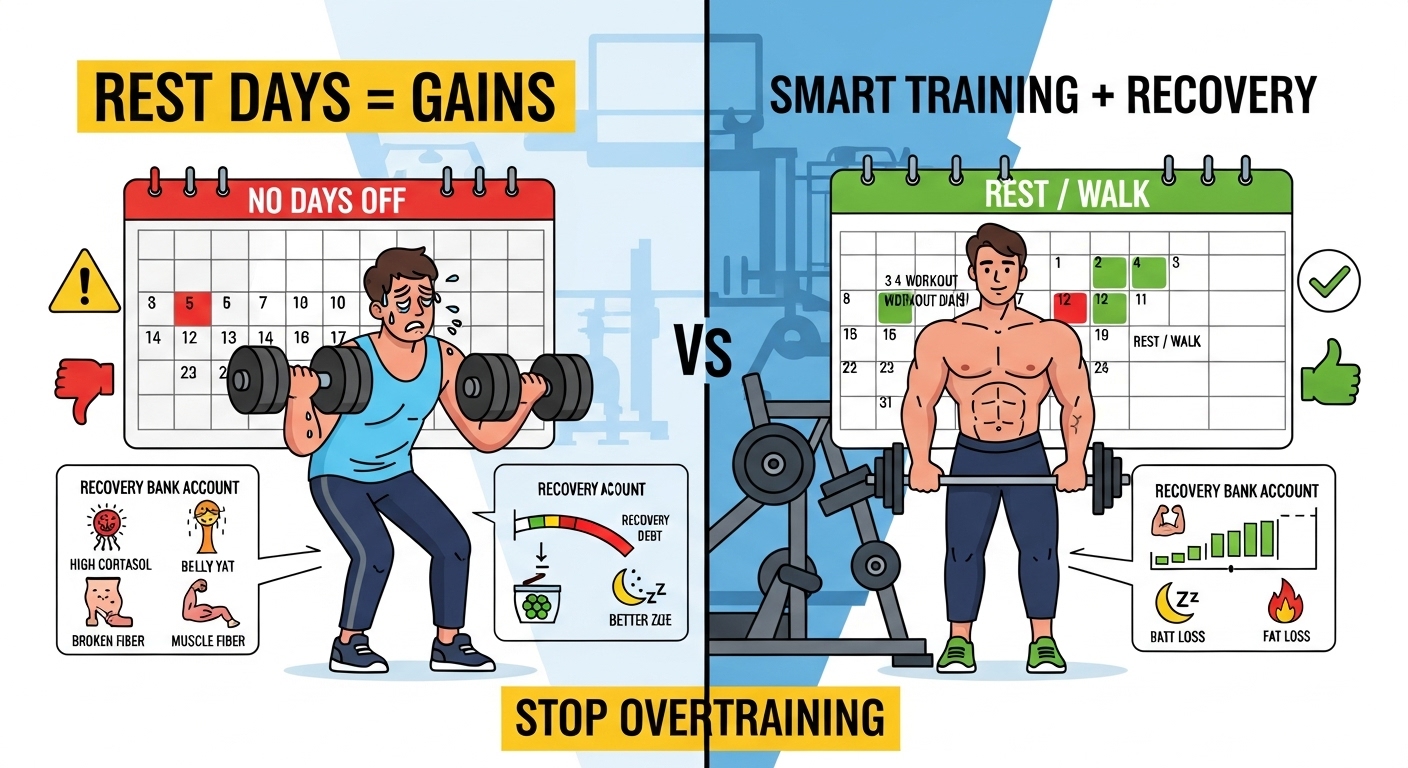
Think of your body’s ability to recover like a bank account. Every workout is a withdrawal. You are draining your central nervous system, depleting your glycogen stores, and creating micro-tears in your muscle fibers.
- The Withdrawal: A high-intensity workout is a massive withdrawal.
- The Deposit: Sleep, nutrition, and rest are the only ways to put “funds” back into the account.
If you make a withdrawal every single day without giving the bank time to process a deposit, you go into recovery debt. Eventually, the “bank” shuts down—leading to injury, illness, or a total plateau in results.
2. The “Chronic Stress” Trap
Exercise is a form of stress. In small, intense doses, it’s beneficial. But when you train every day, your cortisol (the stress hormone) stays chronically elevated.
High cortisol levels are the enemy of a lean physique. They:
- Encourage the body to store fat (especially around the midsection).
- Accelerate muscle breakdown (catabolism).
- Disrupt your sleep patterns, further slowing your recovery.
3. When is it “Okay” to Move Every Day?
There is a massive difference between training and movement.
- Training (The Stimulus): This is high-intensity resistance training or sprints. This should not be done every day. Your muscles and nervous system need at least 48 hours to fully recover from a high-intensity bout.
- Movement (The Maintenance): This is low-intensity activity like walking, light yoga, or swimming. This can—and should—be done every day.
The Simplified Rule: Train 3-4 days a week. Move 7 days a week.
Training Frequency: The Efficiency Scale
| Frequency | Best For… | The Verdict |
| 7 Days / Week | Professional Athletes (with pro recovery) | Avoid. High risk of burnout and injury. |
| 5-6 Days / Week | Advanced Splits (Upper/Lower) | Okay, but only if intensity is moderate. |
| 3-4 Days / Week | Maximum Muscle & Fat Loss | Optimal. Allows for high intensity and full recovery. |
| 1-2 Days / Week | Busy Professionals / Maintenance | Good. Better than zero; great for keeping muscle. |
4. How to Tell if You’re Working Out Too Much
If you are currently a “7-day-a-week” trainer, look out for these Overtraining Red Flags:
- The “Heavy” Feeling: You wake up feeling like you were hit by a truck every morning.
- Loss of Motivation: You used to love the gym, but now you have to drag yourself there.
- Decreased Strength: You’re getting weaker, not stronger, despite “working harder.”
- Poor Sleep: You’re exhausted all day but can’t fall asleep at night (the “wired but tired” effect).
5. The “Fitness Simplified” Strategy
If you feel guilty for taking a day off, reframe your thinking. Rest is a part of the workout. On your rest days, your body is busy synthesizing protein, repairing tissue, and balancing your hormones.
If you don’t take a rest day, you are literally interrupting the process of getting leaner and stronger.
The Bottom Line
Is it “okay” to workout every day? Physically, you can do it, but biologically, it’s an inefficient way to reach your goals. To get the best results in the shortest amount of time, focus on brief, high-intensity sessions 3 to 4 times a week, and spend the rest of your time walking, eating well, and recovering.