
If you’re a vegetarian athlete or someone looking to build muscle, you’ve likely heard the same tired advice: “Just eat more beans and nuts.”
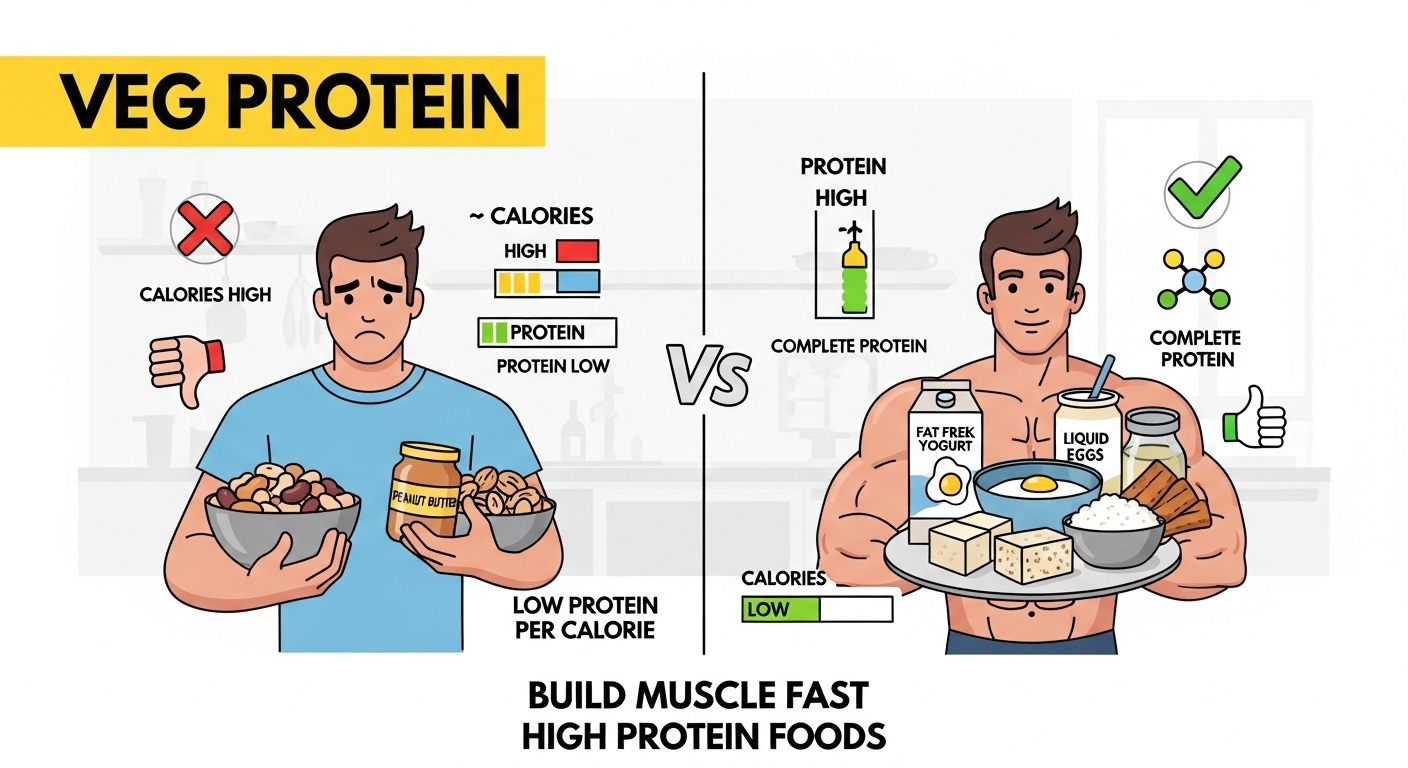
While beans and nuts are fine foods, they are often subpar “protein sources” because they come with a heavy baggage of carbohydrates or fats. If you want to build a lean, muscular physique without meat, you have to be more strategic. You need foods with a high Protein-to-Calorie ratio and a complete Amino Acid profile.
Here is the simplified guide to the most efficient, high-impact protein sources for the vegetarian lifter.
1. The “Gold Standard”: Greek Yogurt (0% Fat)
Greek yogurt is arguably the most efficient vegetarian protein source on the planet. Because it is strained, it removes the liquid whey and much of the sugar, leaving a concentrated protein powerhouse.
- The Stats: 17g of protein per 100 calories.
- The Logic: It contains high levels of Leucine, the primary amino acid responsible for triggering Muscle Protein Synthesis.
- The Swap: Replace your morning cereal with a large bowl of Greek yogurt topped with berries.
2. The Muscle Builder: Liquid Egg Whites
Whole eggs are great, but the fat in the yolk adds up quickly. If you want pure protein volume without the extra calories, liquid egg whites are your best friend.
- The Stats: 10g of protein for only 50 calories.
- The Logic: Egg protein has the highest Biological Value (how well your body actually uses the protein) of any whole food.
- The Strategy: Add liquid egg whites to your whole eggs to double the protein without doubling the fat.
3. The Versatile Staple: Tempeh and Extra-Firm Tofu
Soy often gets a bad reputation, but the science is clear: Soy is a complete protein, meaning it contains all nine essential amino acids your body cannot produce on its own.
- Tempeh: Fermented and dense, providing about 20g of protein per 100g.
- Tofu: Extra-firm varieties provide the most protein per bite.
- The Logic: Unlike beans, which are 70% carbs, tofu and tempeh provide a much cleaner protein-to-carb ratio, making them essential for fat loss phases.
4. The “Hidden” Gem: Seitan (Wheat Gluten)
If you aren’t gluten-sensitive, seitan is a game-changer. It is made from the protein found in wheat and has a texture strikingly similar to meat.
- The Stats: A staggering 25g of protein per 100g.
- The Logic: Seitan is almost pure protein. It is the vegetarian equivalent of a chicken breast in terms of macronutrient efficiency.
5. Low-Fat Cottage Cheese
Often overlooked, cottage cheese is packed with Casein, a slow-digesting protein.
- The Logic: This is the perfect “before-bed” snack. Casein provides a steady drip of amino acids to your muscles while you sleep, protecting your hard-earned gains from breakdown.
Protein Efficiency Comparison (Per 200 Calories)
| Food Source | Protein Amount | Primary Macro |
| Fat-Free Greek Yogurt | 34g | Protein |
| Seitan | 32g | Protein |
| Egg Whites | 40g | Protein |
| Lentils | 14g | Carbohydrate |
| Peanut Butter | 8g | Fat |
The Simplified Takeaway: Notice the bottom of the table. Lentils and peanut butter are “healthy,” but they are inefficient protein sources. Focus on the top of the list to maximize your results.
6. Don’t Forget the “Supplement” Lever
If you are struggling to hit your protein floor (aim for 0.8g to 1g per pound of body weight), a high-quality Whey or Soy Isolate is a logical tool. It is not “cheating”; it is simply an efficient way to get the nutrients your body requires without the excess calories.
The Bottom Line
Building muscle as a vegetarian doesn’t have to be a struggle of eating endless bowls of rice and beans. Focus on high-bioavailability, low-fat dairy, and concentrated soy or wheat proteins. When you simplify your protein choices to focus on efficiency, your physique will reflect the change.
Scientific Evidence & PubMed Studies
1. The Superiority of Egg and Dairy Protein (Biological Value)
Biological Value (BV) measures how much of the absorbed protein is actually incorporated into the proteins of the body. Egg whites and dairy (Greek yogurt/Cottage cheese) consistently sit at the top of this scale.
- The Science: Egg protein has a BV of 100, and Whey/Casein (found in Greek yogurt) ranges from 91 to 104. In contrast, beans and nuts hover between 50 and 70.
2. The Casein Advantage (Cottage Cheese)
The recommendation for cottage cheese before bed is based on the slow-release kinetics of casein.
- The Science: This study shows that pre-sleep protein ingestion, specifically casein, increases muscle protein synthesis rates overnight, helping to shift the body from a “catabolic” (breakdown) state to an “anabolic” (building) state during sleep.
3. Soy and Muscle Hypertrophy (Tofu/Tempeh)
Contrary to “bro-science” myths regarding phytoestrogens, clinical meta-analyses show that soy is an elite muscle builder.
- The Science: A systematic review and meta-analysis of 9 studies found no significant difference between soy protein and whey protein when it came to gains in muscle mass and strength in response to resistance training.
4. The Protein-to-Energy (P:E) Ratio
The concept of “Protein Efficiency” (as shown in your comparison table) is backed by the Protein Leverage Hypothesis.
- The Science: This research suggests that humans will over-consume calories until they meet a specific protein threshold. By choosing high-efficiency sources (Seitan, Egg Whites), you hit that threshold without the excess “energy” (fats/carbs) that leads to fat storage.